
This is the second part of an interview with Ralph G. Giordano who recently published his book Social Dancing in America: A History and Reference Volume 2 Lindy Hop to Hip Hop, 1901-2000.
[Part 1: How come you wrote a book about social dancing in America?]
Part 2: Which dances do you write about in the book?
Chapter 1: Animal Dances, The Castles, and Ragtime: 1901–1919
- Cakewalk, 1890 to 1900 (African American)
- Two-Step, 1890 to 1910 (American vernacular)
- Texas Tommy, 1901 to 1905 (African American)
- Ballin’ the Jack, 1901 to 1905 (African American)
- The Slow Drag, 1901 to 1905 (African American)
- Animal Dances: 1910 to 1920 (American vernacular)
Turkey Trot,
Chicken Scratch,
Monkey Glide,
Grizzly Bear,
Bunny Hug.
- Fox Trot, 1910 to 2000 (American vernacular)
- The One-Step, 1910 to 1920 (American vernacular)
- The Castle Walk, 1915 to 1920 (American vernacular)
- Hesitation Waltz, 1910 to 1920 (American vernacular)
- Apaché, 1910 to 1920 (Paris)
- Maxixe 1910 to 1920 (Brazil)
- Argentine Tango, 1905 to 1920 (South America / Caribbean.)
- Tango, 1905 to 1925 (South America / Caribbean.)
Chapter 2: The Charleston, Flappers, and Jazz: 1920 – 1932
- Black Bottom, 1919 to 1927 (African American)
- The Charleston, 1922 to 1929 (American vernacular and African American)
- Fox Trot, 1910 to 2000 (American vernacular)
- Lindy Hop, 1927 to 1945 (American vernacular)
- Rhumba, 1930 to 2000 (Cuba)
- The Quickstep, 1921 to 1929 (American vernacular)
- The Shimmy, 1922 to 1924(African American)
- Varsity Drag, 1927 to 1929 (American vernacular)
Chapter 3: The Lindy Hop, Jitterbug, and Swing: 1932 – 1947
- The Big Apple, 1938 to 1940 (American vernacular and African American)
- Conga, 1938 to 1945 (Brazil and South America)
- Fox Trot, 1910 to 2000 (American vernacular)
- Jitterbug, mid-1930s to 1945 (American vernacular)
- The Lambeth Walk, 1938 to 1940 (Northern Europe)
- Lindy Hop, 1927 to 1945 (American vernacular)
- Rhumba, 1930 to 2000 (Cuba)
- Samba, 1939 to 2000 (Brazil)
- The Shim Sham, mid-1930s to 1945 (American vernacular)
Chapter 4: The Mambo, American Bandstand, and Rock ’n’ Roll: 1947 - 1960
- The Bop, late-1950s (American vernacular)
- The Bunny Hop, 1953 to 1960 (American Vernacular)
- Cha-Cha, 1955 to 2000 (Cuba)
- The Fish, late-1950s (American vernacular)
- The Hand Jive, late-1950s (American vernacular and African American)
- Hokey Pokey, 1947 through 2000 (American vernacular)
- The Madison, late-1950s (American vernacular)
- Mambo, 1954 to mid-1960s (Cuba)
- Merengue, late-1950s to mid-1960s (Dominican Republic)
- Polka, 1947 to mid-1960s (Czech)
- Square Dancing, 1947 through 2000 (European English)
- The Stroll, late-1950s (American vernacular)
- Tarantella, 1947 through 2000 (Italian)
Chapter 5: The Twist, Doing Your Own Thing, and A Go-Go: 1960 – 1969
- Boogaloo, 1966 to 1969. (Afro-Cuban and Puerto Rican)
- Bossa Nova, mid-1960s (South American)
- The Bostella, 1965 to 1966 (Paris, France)
- “Doing Your Own Thing,” 1965 through 2000 (American vernacular)
- The Fish- solo dance, 1961 to 1962, (American vernacular)
- The Freddy, mid-1960s (England)
- The Frug, 1962 to 1968 (American vernacular)
- Go-Go Dancing, 1964 to 1968 (American vernacular)
- Hippie Freestyle, 1965 to 1974 (American vernacular)
- The Jerk, mid-1960s, (American vernacular)
- The Limbo, 1950 through 2000 (Caribbean)
- Mashed Potato, 1961 to 1963 (African American)
- The Monkey, 1963 to 1964 (American vernacular)
- The Pachanga, 1961 to mid-1960s (Cuba and Latin Caribbean)
- Solo Dance Fads, 1961 to 1966
- The Swim, 1964 to 1965 (American vernacular)
- The Twist, 1960 through 2000 (African American)
- The Watusi, 1961 to 1962 (American vernacular)
Chapter 6: The Hustle, Saturday Night Fever, and Disco: 1970 – 1979
- American Hustle, 1975 to 1979 (Latin American)
- The Breakdown, 1974 to 1976 (African American)
- The Bump, 1975 to 1979 (American vernacular)
- The Bus Stop, 1975 to 1979 (American vernacular)
- Disco Line Dances, 1975 to 1979 (American vernacular)
- Disco Freestyle, 1975 through 2000 (American vernacular)
- Latin Hustle, 1975 to 1979 (Latin American)
- The Lock, 1974 to 1976 (African American)
- The Hustle, 1975 to 1979 (Latin American)
- The L. A. Hustle, 1975 to 1979 (Latin American)
- New York Hustle, 1975 to 1979 (Latin American)
- Reggae, 1975 through 2000 (Jamaica)
- Scooby Doo, 1974 to 1976 (African American)
- Shout!, 1978 through 2000 (American vernacular)
- Time Warp, 1977 to late-1980s (England)
- Toga, 1978 through 2000 (American vernacular)
- Y-M-C-A, 1978 through 2000 (American vernacular)
Chapter 7: Breakdancing, Country Dancing, and the Swing Dance Revival: 1980 - 2000
- Breakdancing, 1970 to mid-1980s (African American)
- Country Line Dancing, 1990 to 2000 (American vernacular)
- Country Dancing, 1980 through 2000 (American vernacular)
- East Coast Swing, 1990 through 2000 (American vernacular)
- The Electric Slide, 1989 through 2000 (American vernacular)
- Hip-hop, late-1980s through 2000 (African American)
- “House Music,” mid-1980s through 2000 (American vernacular)
- Krumping, late-1990s through 2000 (African American)
- Lindy Hop Revival, mid-1980s through 2000
- The Lambada, 1988 to 1991 (Brazil)
- Macarena, 1993 to 2000 (Spain and South America)
- Moonwalk, 1983 to 1990 (African American)
- Rave, mid-1980s through 2000 (Urban American),
- Salsa, 1980 through 2000 (Latin American and Caribbean)
- Square Dancing, 1947 through 2000 (American vernacular)
- Swing Revival, 1992 through 2000 (Urban American),
- Shag, 1947 through 2000 (American vernacular)
- Slam Dancing, 1980 to mid- 1990s, (England and Urban American),
- Two Step, 1980 through 2000 (American vernacular)
- Vogueing, 1990 to 1995 (Urban American),
- West Coast Swing, mid-1950s through 2000 (American vernacular)
Wednesday, January 17, 2007
Social dancing in America: List of dances included in the book


Sunday, April 8, 2007
How records were made in the 1930s: featuring Duke Ellington
Are you curious how records was made in the 1930s? Here is a kind of documentary footage how the record making process worked in 1937. Really interesting and educating! The orchestra featured in the video clip is Duke Ellington with singer Ivy Anderson.
What do you think of this documentary video clip about record making? Tell me.
Friday, March 30, 2007
Man, That's Groovy with Jimmy Dorsey and Helen O'Connell
A while ago I wrote about a PBS documentary about soundies. In the trailer for the documentary I spotted a soundie that I really liked: the song Man, That's Groovy with Jimmy Dorsey and singer Helen O'Connell. Enjoy this video clip.
In "Man, That's Groovy" Helen O'Connell sings about the slang words used in the 1930s called jive talk.
All the cats are solid senders and especially Jimmy Dorsey when he takes off with his clarinet. Helen O'Connell is a solid canary and this song makes me want to be a rug cutter. Jack, do you collar this jive?
If that last paragraph was hard to understand, you should check out Cab Calloways jive dictionary.
What do you think of this video clip with Jimmy Dorsey and Helen O'Connell? Tell me.
Saturday, June 2, 2007
Rhythm & Jive Jamboree at Katalin
Tonight it's Rhythm & Jive Jamboree at Katalin and all that jazz. The performers this night is the Sweet Emma & The Mood Swingers which plays high energy rhythm & blues with a touch of swing, Slaptones which will play rhythm & blues/ rockabilly and last but not least Svante Grundberg who will dj och show vintage clips from the 1930s-1950s. There will be place to dance there, so go and check them out.
I think it's going to be a great evening. It all starts at 21 o'clock and costs 130 kr.
Have you heard any of the bands before? What do you think? Tell me.
Friday, August 24, 2007
Dance picnic with Lennakatten
On Sunday the 26th, there will be a dance picnic in Länna outside Uppsala organized by the dance organisation Swingkatten. For the third year in a row we will take the steam train, Lennakatten, to Länna and the outside dancing place known as "Kopphagens dansbana".
There will be taster lessons in lindy hop and charleston and live music will be played by the orchestra Canal Street Syncopators. After the band have finished I will dj a set with great swing music.
The theme of the picnic is the 1920s-1930s, so if you got any clothing that resembles that era, please wear it, othervise, wear your sunday best clothes.
Read more about the dance picnic at Swingkattens website.
"[A] picnic can be defined simply as a pleasure excursion at which a meal is eaten outdoors, ideally taking place in a beautiful landscape. [Wikipedia]"
Are you planning to join the dance picnic? Do you want me to play a certain song? Tell me.
Sunday, December 28, 2008
Wingy Manone - Ochi Chornya
Here is Wingy Manone and his Orchestra performing "Ochi Chornya" in a recording from 1938.
The YouTube poster, edmundusrex has uploaded a lot of songs with artists from the 1920s and the 1930s. A goldmine to dig into and discover more about early jazz and blues artists.
I don't have time to browse through them all, why don't you take a look at his videos and recommend your favorite clips in the comments below?
You also might want to check out 100 Great Records Of The 1920s.
What do you think of Wingy Manone performing Ochi Chornya? What is your favorite clip?Please comment.
Monday, March 17, 2008
Swe-dukes at Skarholmen: Concert photos
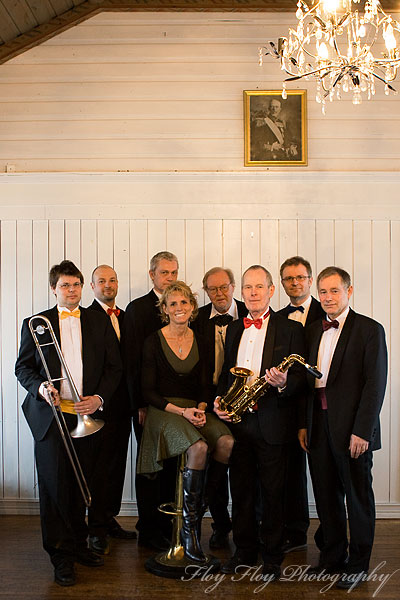
Two weekends ago the band Swe-dukes play for dancers and listeners at Skarholmen in the south of Uppsala. They play just Duke Ellington songs. Duke Ellington wrote very many songs in very many styles but the great thing about Swe-dukes is that they concentrate on the swinging danceable songs from the 1930s and 1940s.
I liked their versions of Good Queen Bess and Stompy Jones.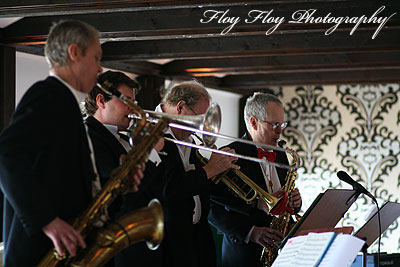
There is a good floor for dancing right in front of the band. I encourage more dancers to check out Skarholmen because Swe-dukes are going to play there three more times this spring: April 6th , May 11th and June 1st.
Just dancing costs 50 kr. If you like you can eat your Sunday dinner there as well.
As the spring progresses you can easily go the by bike if you like (but it takes some time though to get there). Another easy way to get there is to take bus 20 which stops right outside Skarholmen. It takes about 25 min by bus. Some places to enter the bus downtown is at Kungsgatan in front of Centralstationen (stop A2) or the bus stop in front of Carolina Rediviva.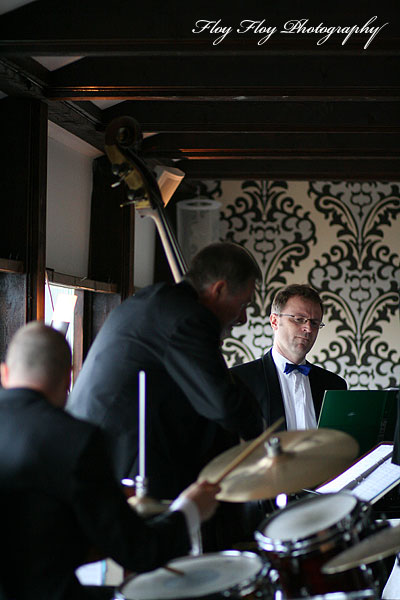
Swe-dukes consists of Bosse Broberg (trumpet), Dicken Hedrenius (trombone), Anders Gahnold (saxophone), Ulf Lindsjö (saxophone), Håkan Hedstrand (piano), Curt Andersson (bass), Johan Ståhlgren (drums) and Karin Hallin (song).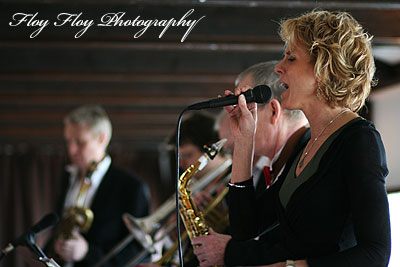 The photos are taken by me and may not be published elsewhere without my permission. Contact me if you want to license them.
Have you heard Swe-dukes play? What do you think of them? Tell me.
Thursday, May 17, 2007
Interview: Cynthia Millman: co-author of "Frankie Manning: Ambassador of Lindy Hop"
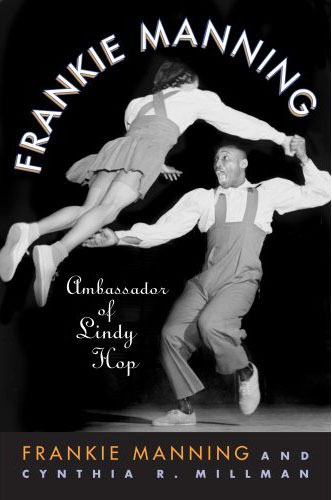
The autobiography by Frankie Manning: Frankie Manning: Ambassador of Lindy Hop has just been released. Cynthia Millman is co-author of the book and I was curious about her so I did an interview with her to find out more about her and the process behind writing the biography.
Can you tell me a little bit about yourself? What do you do for a living? When did you start dancing?
I loved dancing as a kid, but didn’t start training until age 12, after seeing a ballet demonstration. Since then I’ve explored many, many forms of classical, modern, and ethnic dance, but once I discovered swing dancing in the mid 1980s, that was it. I have a master’s degree in dance and dance education, and taught dance (mostly to children) and performed (on and off) for 25 years. Somewhere in there, I made a career shift. I earned a master’s in library science, and have been a children’s librarian for the last fifteen years, currently at The Town School in Manhattan.
When did you first meet Frankie?
I first met Frankie at a dance in 1986, which I describe in the book’s introduction. I didn’t really get to know him until I began performing with the Big Apple Lindy Hoppers in 1990. It was while hearing his stories at dinner after rehearsals that I first realized what an interesting life he had lived, and how gifted he was at describing his experiences.
How would you describe Frankie Manning to someone who doesn’t know him?
Frankie Manning was one of the main creators of the lindy hop at Harlem’s Savoy Ballroom during the 1930s. His choregraphic innovations, especially the air step and synchronized ensemble routines, helped catapult the lindy from ballroom to stage and screen. Frankie’s choreography for and performances as a lead dancer with Whitey’s Lindy Hoppers helped popularize the lindy and disseminate it across America and around the world. With the demise of the Swing Era, Frankie took a “temporary” job in the Post Office . . . and ended up working there for 30 years! His rediscovery by a new generation of swing dancers and his professional comeback were a driving force in the swing dance revival that began in the 1980s and is still going strong. Today, at 93, Frankie has a packed teaching schedule and travels constantly to share with others the joy that swing dancing has brought him. An inspiration to us all, Frankie is as beloved for his marvelous personality as he is for his vital role in American dance history.
Frankie is one of my favorite people in the world, and collaborating on his autobiography was one of the greatest experiences of my life.
How come you started to write the book about Frankie Manning?
In 1987, I interviewed Frankie Manning for an article about the swing dance revival for a small local newspaper in Manhattan. I subsequently interviewed him for a master’s thesis project, an extensive exhibit on the history of swing dancing (which showed at swing dance events in New York City, Herrang, London, and Toronto), and for articles in Dance Magazine and The International Encyclopedia of Dance. In 1993, Frankie and I began doing educational presentations on lindy history that included lecture, interview, demonstration, and video clips. Around this time, I realized that I was completely enchanted by the history of swing dancing and asked Frankie if we could do a book together. Happily, he said yes.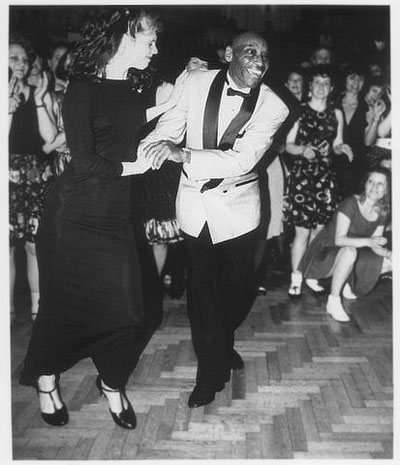
Frankie Manning dancing with Cynthia Millman at CAN'T TOP THE LINDY HOP! during a birthday dance on the occasion of his 80th birthday party in New York City, 1994. Photographer: Timothy Swiecicki.
What is your favorite story from the book?
I love all of Frankie’s stories, but the one that stands out for me is when he danced with Betty Grable at a USO show in New Guinea during World War II. In addition to being a fun story, I feel that it illustrates so much of what Frankie is all about: his ability to make the best of a bad situation with incredible pluck and humor; his use of dance to connect to individuals and audiences; his love of entertaining people and lifting their spirits with his dancing; his professionalism as an entertainer; his respect for musicians; his personal charm; and his ability to disable racial prejudice at a time when it was so deeply entrenched in and so openly a part of American culture.
I also find his story about Sergeant Montgomery very moving. It’s one of the first stories I ever heard Frankie tell, and I’ll never forget hearing it that first time.
Now that the book is done, do you have any other subjects that you would like to write about?
As a children’s librarian, I have quite a few ideas for children’s books. I’m also interested in doing some articles on holistic health practices and meditation. And I’m considering some other research projects in the swing dance area.
Is there anything else you would like to mention?
Just that I hope everyone enjoys reading about Frankie Manning's life. Part of why we were able to get a publisher was because we could demonstrate to Temple University Press that there was an extensive international audience for Frankie’s story. Thinking about sharing the book with all of you helped keep us going during the lengthy process of getting that rich, long life into the pages of a book.
Thank you, Cynthia Millman, for taking time to answer the questions!
Thanks for giving me the opportunity to talk about the book.
Update: Read my book review here.
Order Frankie Manning: Ambassador of Lindy Hop at Amazon.com. Maybe join the campaign to make the book a best seller?
What do you think of this interview? Got other questions for Cynthia Millman? Tell me.
Tuesday, April 17, 2007
Swing dj Svante Grundberg at Dekadans
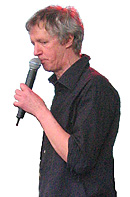 Don't miss swing dj Svante Grundberg at Dekadans tonight. Svante Grundberg lives in Stockholm where he djs a lot. Svante is also an actor who has appeared in Swedish cult movies such as "Göta Kanal" and "Sällskapsresan".
Together with Björn Wallde he had a tv program called "Nattsudd" where they played music clips from the 1930s through the 1950s.
Have you heard Svante Grundberg dj swing before? What do you think? Tell me.
Sunday, May 18, 2008
Book review: Frankie Manning - Ambassador of Lindy Hop
Book review: Frankie Manning - Ambassador of Lindy Hop
A year ago the legendary lindy hopper Frankie Manning published his autobiography called Frankie Manning - Ambassador of Lindy Hop. Frankie Manning is one of the most influential dancers in the swing dance history and the story about him and his life was highly anticipated.
Frankie Manning's autobiography is important in several ways:
The personal story of an influential dancer
This is the personal story about one of the most influential lindy hop dancers in the history of swing dancing. Frankie was the first lindy hopper to really use airials (air steps, acrobatic steps) in his dancing and performing. He has had a great career as a dancer both as an innovator in the early years of lindy hop but also as an important person in the revival of the lindy hop in the 1980's.
The evolution of the lindy hop
It is the story how lindy hop and swing dancing evolved in the early day. Lindy hop had already gotten its name (by "Shorty" George Snowden, it's said) when Frankie started dancing and the basic structure was there but it was still very much an evolving dance. Frankie Manning tell us about how dance concepts, that now are commonplace, were developed. One of those concepts is the twisting in the swingout by the ladies.
Growing up in the swing era
The book tells about how it was to grow up and live in the swing era. Many dancers today are very curious about what life was like in the swing era and it's great to get a first hand account of the life style of a dancer hanging out in the ballrooms in New York in the 1930's.
You also get to know a little bit more about the other great dancers that lived then. Since most of them didn't participate in the swing revival in the 1980's, they have been partly forgotten about but in this book they get their credit. You get more background information about the dancers you've only seen in movie clips.
A dancer's perspective of the entertainment industry
Most of the books that has been written about entertainment industry in the swing era have focused on the bands, the musicians and the singers. Therefore it's refreshing to have a new perspective, a dancer's perspective, on the entertainment industry during the 1930s-1950s.
You get the insider story about what went on behind the scenes in the filming of Hellzapoppin. You'll get the stories about preparing for the performances on stage and the tours with the dance groups Whitey's Lindy Hoppers and The Congaroos.
Frankie Manning provides some new stories about the big stars and performers of that time, such as Count Basie, Duke Ellington and Billy Holiday.
Dealing with segregation
There is also a theme in the book about segregation and how people (and Frankie in particular) dealt with it. The famous Savoy ballroom where Frankie spent most of his time dancing was integrated but a lot of places weren't. He talks about segregation during his tours in the south of USA and during his time in the army during World War II.
Facts about the dances and the era
Cynthia R. Millman is the co-author of the book and and most of the stories in the book comes from interviews and talks she has had with Frankie. Besides being the person putting the book together she also contributes some texts of her own in the book. She has written fact pages inserted here and there that presents facts about related dances and phenomenons like Charleston, Big Apple, breaks (in the music) or the Cats' Corner.
My thoughts about the book
I think this is an important book for anyone who is interested in lindy hop or the swing era. I've heard Frankie Manning's stories when he have visited the Herräng Dance Camp and it's nice to have them collected in written form. Not much is written about social dancing and I think it is important that Frankie's stories are written down so that they don't get altered when being retold.
I find the book pretty complete but I would have liked more information about his experiences during the swing revival in the 1980's and 1990's.
Anyone who have met Frankie Manning can tell you that his smile and his laugh is infectious. I think his positive attitude really comes across in the book.
If you're a lindy hopper, you should own this book!
Furter reading:
Table of contents of the book
My interview with Cyntia R. Millman
All blog posts about Frankie Manning.
Another review of the book by JazzReview
Have you read "Frankie Manning - Ambassador of Lindy Hop"? What do you think about the autobiography? Tell me.
Thanks to Cynthia R. Millman and Temple University Press for providing me with a copy of the book.



