
I hope I didn't scare you with the photo above. Sometimes when I'm out taking photos unexpected things like these pop up in front of my lens. Booo! ;)
Yesterday I visited our (almost) weekly dance Cats' Corner. This season we don't have just one but several locations for the dance. This time it was held at Gotlands nation. It was there very first time we had the dance there, so there was some things to figure out how they worked.
Another debut for the night: Agnes Hjelm debuted as a swing dj and I think she played very well. She played both old classics as well as some neo swing.
One especially nice thing about Gotlands nation as a swing venue is that there are some space where people really can sit down and talk while they are not dancing. Oftentimes it's just "dance, dance, dance!" and you never get a chance to chat with people.
One other thing you could do when you're not dancing is to read the old magazines that we have bought. All the magazines are from the 1940s-1950s and it's fun to read what they thought was important to write about then. It's also entertaining to read the advertisements.
The photos are taken by me and may not be published elsewhere without my permission. Contact me if you want to buy or license them.
What do you think of Cats Corner at Gotlands nation? Please comment.
Wednesday, March 4, 2009
Cats' Corner at Gotlands nation


Friday, June 27, 2008
Where the hell is Matt? Matt Harding dances all over the world.
Matt Harding travels all over the world and dances in all kinds of locations. This is a video clip that really makes you want to dance. Awesome! Yeah!
Do yourself a favor, watch the video clip in the high quality mode at Youtube or watch this clip at Vimeo.
If you like the video as much as I did, leave Matt a comment.
My top 3 locations that Matt Harding dances at:
- Demilitarized zone, Korea
- Poria, Papua New Guinea
- Tongatapu, Tonga
I got this tip by the lovely and charming Miss V. Thank you so much. Now I've featured tips from readers two days in a row. Keep sending me these tips. I love it. And remember, if you're a Facebook user, please become a fan of the Swing, jazz, blues blog on Facebook. I'd like to get to know you.
What is your top 3 locations that Matt Harding dances at? Please comment.
Thursday, July 19, 2007
Ella Mae Morse - Ghost Catchers
Ella Mae Morse was a good jazz singer and she also acted a little bit, here she is in a movie called Ghost Catchers (1944) where they successfully use swing music and swing dancers to chase away the ghosts from a haunted house. Watch the video clip from Ghost Catchers.
The lindy hopping is choreographed and uses a lot of air steps (aerials) and has that special Hollywood styling to it.
(Sorry, I couldn't resist: "Who you gonna call? Swing dancers!")
Read more about Ella Mae Morse over at The Pop Culture Cantina.
What do you think of the video clip with Ella Mae Morse from Ghost Catchers? Tell me.
Wednesday, May 23, 2007
Frankie Manning: "Dancing keeps you young"
Dancing keeps you young, says lindy hop legend Frankie Manning in this video clip from when he was 81 years young. Just look at him dancing, that's what I want to do as well when I'm 81. Now, more than ten years later Frankie is still going strong, so follow Frankie's advice:
"Anybody out there who is not dancing should start."
On Saturday May 26th Frankie celebrates his 93rd(!) birthday and a great gift would be to make his new autobiography "Frankie Manning: Ambassador of Lindy Hop" a best seller at Amazon.com. Buy your copy of the book on May 26th. Join the campaign.
Wow. 93 years and still young. Dancing and laughing a lot seems to be the way to stay young.
Can anyone tell me who the woman that Frankie is dancing with is?
Does dancing keep you young, just like Frankie Manning says? Tell me.
Wednesday, May 2, 2007
How to play swing bingo
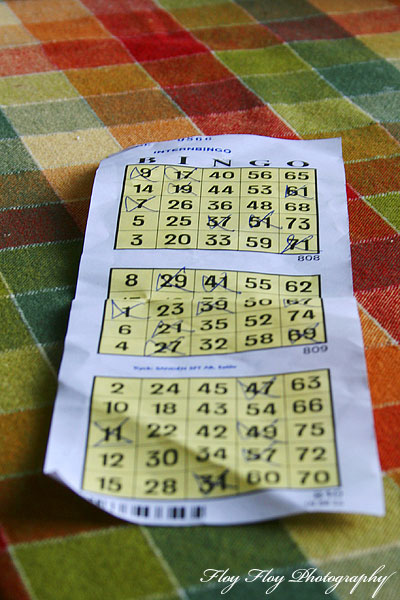
Two weeks ago we played a game at the club Dekadans called swing bingo.
The idea is of course to get five numbers in a row and the way you get your numbers goes like this: Every dancer draws a paper with a number from a hat. The numbers are from zero to nine. If you don't have a lot of paper, you tell the participants to look at their paper and remember the number and return the paper to the hat.
The dj puts on a song and you dance with someone, after the song is over you ask the other person what what number they have and you mark all the squares on your paper where the last digit is the same as your partners.
Then you change partner and dance another song and hope that this person has a different number. Repeat until someone shouts BINGO!
This is a great way to mix the dancers and encourage them to dance with someone they haven't danced with before.
The photo is taken by me and may not be used elsewhere without my permission. Contact me if you want to licence the photo.
[Below is some links to Dean Martin cds. My association chain went like this: bingo -> game -> Las Vegas -> Rat Pack -> Dean Martin].
What do you think of swing bingo? What other games could you do at dances? Tell me.
Wednesday, April 18, 2007
Louis Armstrong - Paris Blues - Jam Session
Do you want high energy swing music? Well, here you go! Here is a great video clip from the movie Paris Blues with Louis Armstrong.
Paul Newman and Sidney Poitier plays musicians playing in a jazz club when Louis Armstrong and his band comes crashing in (that's how you make a entrance!) and challenge each of them in a jam session.
In beginning of this video clip there is some swing dancing. I just love the energy of the music and I love the joy they express. It truly shows what swing music is all about.
Paris Blues was released in 1961.
What do you think of this video clip from Paris Blues with Louis Armstrong. Tell me.
Wednesday, April 11, 2007
Louis Jordan - Caldonia
One of the things I'd like to do in this blog is to introduce you to great jazz and blues artists; here is one I haven't featured before: Louis Jordan performing the song Caldonia.
Louis Jordan was one of the best artists in the music style that is called jump blues. Jump blues is based on blues and swing but the horn section is more prominent and often an electric guitar is added. Jump blues was a step in the evolution of rock 'n' roll.
Caldonia is a fun song to play at dances, first of all it got great energy. Secondly, most dancers recognize the big break in the music at "What makes your big head so hard" and do something spectacular. Often they make a big jump. On one occasion when I was swing djing, the floor vibrated some from the dancing and I actually had to lift the cd player up when break came, otherwise the cd player would have skipped a beat due to all the jumping dancers.
What do you think of this video clip with Louis Jordan performing Caldonia? Tell me.
Monday, April 9, 2007
Melissa Mason with the Roger Wolfe Kahn Orchestra
In this video clip Melissa Mason is dancing to the song "Dinah" performed by the Roger Wolfe Kahn Orchestra. I don't know how she makes her legs do the things they do, but it's impressive.
The film sequence is from the short film The Yacht Party (1932).
What do you think of the video clip with Melissa Mason? Tell me.
Thursday, March 22, 2007
Harry 'The Hipster' Gibson - Keep the Beat!
Do you think school should be more fun? Well then, take a look at this video clip with Harry 'The Hipster' Gibson performing Keep the Beat! from the movie Junior Prom from 1946.
Jive talking Harry 'The Hipster' Gibson looks kind of wacky when he plays the piano but the music is swinging with a boogie woogie rhythm with bop scatting in the breaks. He is supported by the Abe Lyman Orchestra. In the video clip there is some swing dancing and even a minuet(?).
I just love the opening line of the video clip:
"and now my dear little zombies... "
I bet your teacher didn't say that to you. Or?
What do you think of this video clip with Harry 'The Hipster' Gibson? Tell me.
Tuesday, March 20, 2007
Ulf Carling: Swing dj at Dekadans tonight
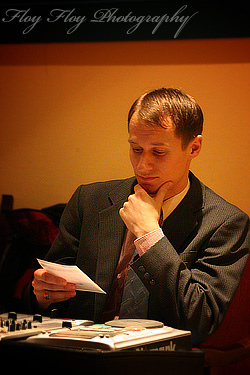 Tonight Ulf Carling will be the swing dj at Dekadans. Come there and dance to the swing music.
Tonight is a also Beginners Night where we try to get as many people there from the beginners courses and get them to have fun dancing socially.
During one hour in the beginning of the evening all experienced dancers dance only with beginners and get to know them.
I think this is a important thing to do, when you start dancing you are easily intimidated by experienced dancers. You think that they are too good to ask to dance because they will get bored because you don't know much stuff.
As an experienced dancer I can tell you that that is not the case as long as you are smiling and you're trying your best. We want you do become a better dancer but we know that it takes time. Knowing this, it might be easier to ask someone to dance, it's still a little bit intimidating, but you must be brave.
I always try to dance with two or three persons a night that I haven't danced with before. It's fun to get to know new people.
Now, a little bit more about Ulf Carling. Ulf is also a drummer in the Carling Family band. He always adds a good portion of humour when he plays drums. All his family is talented musicians, the most well known relative is his sister Gunhild Carling. Tonight at Dekadans, I hope he plays a private recording of One Oclock Jump from when Gunhild played with the Count Basie Orchestra. I really would like to have that recording myself because it's really great!
As a bonus I've found a old video clip from 1990 with Carling Hot Six playing "You're Driving me Crazy" with Ulf at the drums and his sisters doing a charleston dance routine.
The photo of Ulf Carling was taken by me and may not be used elsewhere without my permission.
Have you heard Ulf Carling play drums or dj? Tell me.
Tuesday, February 27, 2007
Christina Aguilera - Candy man
Christina Aguilera has released a new album Back to basics where she is influenced by the music and fashion of the 1920s-40s. This can be seen in her video "Candy man", which seems to be set in WW2 times. It has several popular culture references to that time, Christina Aguilera does a 'We can do it' pose in the end of the video.
This is probably what Andrews sisters would do if they were alive today. In WW2 artists made what was called V-discs and they were sent overseas to boost the soldiers spirit. Candy man has some similarities with the song Boogie Woogie Bugle Boy which Andrews sisters made famous.
In the video you see some swing dancing (well, mostly aerials) with Christina Aguilera and Benji Schwimmer (who won season 2 of So You Think You Can Dance). I like the video because it has high energy and nice fashion.
Now, this is hardly straight swing, more like pop-styled boogie woogie, so I'm presenting this as a novelty item, I'll be back with regular swing tomorrow.
Via Yehoodi.
What do you think of Candy man with Christina Aguilera? Tell me.
Wednesday, January 17, 2007
Herräng Dance Camp 2007
Herräng Dance Camp is the worlds largest dance camp for lindy hop, boogie woogie, balboa and tap dancing.
This year they celebrate their 25th anniversary and the dance camp will be going on for five (five!) weeks this summer. Unbelivable! Herräng dance camp is truly the Mecka of swing dancing where people from all over the world come to dance. Here you can find the best instructors and there is just so much going on in Herräng that you can dance 24-7 if you like. Here are live music with swing and jazz bands, great swing disc jockeys and also blues nights.
This year, besides a massive amount of lindy hop, there are more balboa courses than last year and they have added some African-Cuban dancing (Rhumba, Mambo, Cha-Cha).
If you heard rumours about Herräng dance camp - they are probably true - it's a fantastic place to be. And, just like Mecka, if you're a swing dancer you must go here at least once in your life. Chanses are that you will be coming back.
If you want to read more about what Herräng Dance Camp is like, check out Lloyds stories from previous years.
Social dancing in America: List of dances included in the book

This is the second part of an interview with Ralph G. Giordano who recently published his book Social Dancing in America: A History and Reference Volume 2 Lindy Hop to Hip Hop, 1901-2000.
[Part 1: How come you wrote a book about social dancing in America?]
Part 2: Which dances do you write about in the book?
Chapter 1: Animal Dances, The Castles, and Ragtime: 1901–1919
- Cakewalk, 1890 to 1900 (African American)
- Two-Step, 1890 to 1910 (American vernacular)
- Texas Tommy, 1901 to 1905 (African American)
- Ballin’ the Jack, 1901 to 1905 (African American)
- The Slow Drag, 1901 to 1905 (African American)
- Animal Dances: 1910 to 1920 (American vernacular)
Turkey Trot,
Chicken Scratch,
Monkey Glide,
Grizzly Bear,
Bunny Hug.
- Fox Trot, 1910 to 2000 (American vernacular)
- The One-Step, 1910 to 1920 (American vernacular)
- The Castle Walk, 1915 to 1920 (American vernacular)
- Hesitation Waltz, 1910 to 1920 (American vernacular)
- Apaché, 1910 to 1920 (Paris)
- Maxixe 1910 to 1920 (Brazil)
- Argentine Tango, 1905 to 1920 (South America / Caribbean.)
- Tango, 1905 to 1925 (South America / Caribbean.)
Chapter 2: The Charleston, Flappers, and Jazz: 1920 – 1932
- Black Bottom, 1919 to 1927 (African American)
- The Charleston, 1922 to 1929 (American vernacular and African American)
- Fox Trot, 1910 to 2000 (American vernacular)
- Lindy Hop, 1927 to 1945 (American vernacular)
- Rhumba, 1930 to 2000 (Cuba)
- The Quickstep, 1921 to 1929 (American vernacular)
- The Shimmy, 1922 to 1924(African American)
- Varsity Drag, 1927 to 1929 (American vernacular)
Chapter 3: The Lindy Hop, Jitterbug, and Swing: 1932 – 1947
- The Big Apple, 1938 to 1940 (American vernacular and African American)
- Conga, 1938 to 1945 (Brazil and South America)
- Fox Trot, 1910 to 2000 (American vernacular)
- Jitterbug, mid-1930s to 1945 (American vernacular)
- The Lambeth Walk, 1938 to 1940 (Northern Europe)
- Lindy Hop, 1927 to 1945 (American vernacular)
- Rhumba, 1930 to 2000 (Cuba)
- Samba, 1939 to 2000 (Brazil)
- The Shim Sham, mid-1930s to 1945 (American vernacular)
Chapter 4: The Mambo, American Bandstand, and Rock ’n’ Roll: 1947 - 1960
- The Bop, late-1950s (American vernacular)
- The Bunny Hop, 1953 to 1960 (American Vernacular)
- Cha-Cha, 1955 to 2000 (Cuba)
- The Fish, late-1950s (American vernacular)
- The Hand Jive, late-1950s (American vernacular and African American)
- Hokey Pokey, 1947 through 2000 (American vernacular)
- The Madison, late-1950s (American vernacular)
- Mambo, 1954 to mid-1960s (Cuba)
- Merengue, late-1950s to mid-1960s (Dominican Republic)
- Polka, 1947 to mid-1960s (Czech)
- Square Dancing, 1947 through 2000 (European English)
- The Stroll, late-1950s (American vernacular)
- Tarantella, 1947 through 2000 (Italian)
Chapter 5: The Twist, Doing Your Own Thing, and A Go-Go: 1960 – 1969
- Boogaloo, 1966 to 1969. (Afro-Cuban and Puerto Rican)
- Bossa Nova, mid-1960s (South American)
- The Bostella, 1965 to 1966 (Paris, France)
- “Doing Your Own Thing,” 1965 through 2000 (American vernacular)
- The Fish- solo dance, 1961 to 1962, (American vernacular)
- The Freddy, mid-1960s (England)
- The Frug, 1962 to 1968 (American vernacular)
- Go-Go Dancing, 1964 to 1968 (American vernacular)
- Hippie Freestyle, 1965 to 1974 (American vernacular)
- The Jerk, mid-1960s, (American vernacular)
- The Limbo, 1950 through 2000 (Caribbean)
- Mashed Potato, 1961 to 1963 (African American)
- The Monkey, 1963 to 1964 (American vernacular)
- The Pachanga, 1961 to mid-1960s (Cuba and Latin Caribbean)
- Solo Dance Fads, 1961 to 1966
- The Swim, 1964 to 1965 (American vernacular)
- The Twist, 1960 through 2000 (African American)
- The Watusi, 1961 to 1962 (American vernacular)
Chapter 6: The Hustle, Saturday Night Fever, and Disco: 1970 – 1979
- American Hustle, 1975 to 1979 (Latin American)
- The Breakdown, 1974 to 1976 (African American)
- The Bump, 1975 to 1979 (American vernacular)
- The Bus Stop, 1975 to 1979 (American vernacular)
- Disco Line Dances, 1975 to 1979 (American vernacular)
- Disco Freestyle, 1975 through 2000 (American vernacular)
- Latin Hustle, 1975 to 1979 (Latin American)
- The Lock, 1974 to 1976 (African American)
- The Hustle, 1975 to 1979 (Latin American)
- The L. A. Hustle, 1975 to 1979 (Latin American)
- New York Hustle, 1975 to 1979 (Latin American)
- Reggae, 1975 through 2000 (Jamaica)
- Scooby Doo, 1974 to 1976 (African American)
- Shout!, 1978 through 2000 (American vernacular)
- Time Warp, 1977 to late-1980s (England)
- Toga, 1978 through 2000 (American vernacular)
- Y-M-C-A, 1978 through 2000 (American vernacular)
Chapter 7: Breakdancing, Country Dancing, and the Swing Dance Revival: 1980 - 2000
- Breakdancing, 1970 to mid-1980s (African American)
- Country Line Dancing, 1990 to 2000 (American vernacular)
- Country Dancing, 1980 through 2000 (American vernacular)
- East Coast Swing, 1990 through 2000 (American vernacular)
- The Electric Slide, 1989 through 2000 (American vernacular)
- Hip-hop, late-1980s through 2000 (African American)
- “House Music,” mid-1980s through 2000 (American vernacular)
- Krumping, late-1990s through 2000 (African American)
- Lindy Hop Revival, mid-1980s through 2000
- The Lambada, 1988 to 1991 (Brazil)
- Macarena, 1993 to 2000 (Spain and South America)
- Moonwalk, 1983 to 1990 (African American)
- Rave, mid-1980s through 2000 (Urban American),
- Salsa, 1980 through 2000 (Latin American and Caribbean)
- Square Dancing, 1947 through 2000 (American vernacular)
- Swing Revival, 1992 through 2000 (Urban American),
- Shag, 1947 through 2000 (American vernacular)
- Slam Dancing, 1980 to mid- 1990s, (England and Urban American),
- Two Step, 1980 through 2000 (American vernacular)
- Vogueing, 1990 to 1995 (Urban American),
- West Coast Swing, mid-1950s through 2000 (American vernacular)
Sunday, January 14, 2007
Social Dancing in America: A History and Reference Volume 2 Lindy Hop to Hip Hop
A new interesting book about dancing and lindy hop by Ralph G. Giordano has been published: Social Dancing in America: A History and Reference Volume 2 Lindy Hop to Hip Hop, 1901-2000 .
From the book description:
"relates the history of the most popular social dances, where they began, which dances survived the test of time and why, and what attracted American men and women to social dancing in these periods. Unlike other books on social dancing that taught people "How to Dance," this books not only describes the dances, but also WHY Americans danced."
Have you read this book? Please tell me what you think of it.



